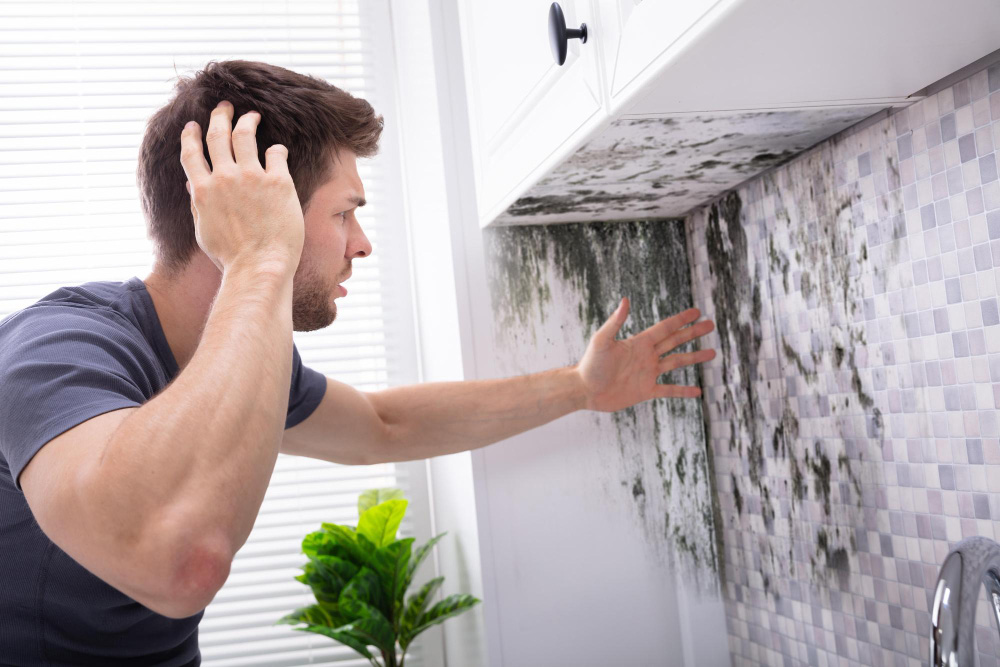
The most important thing to know about mould is that it can only grow in the presence of moisture. If we reduce the moisture content in our homes, we reduce the chance for mould to grow. Perth tends to enjoy a hot and dry climate which lends itself to less of the dramatic mould damage stories we see in the media, both in the Eastern States and overseas.
What makes a house damp?
Whilst we all know a plumbing leak or hole in the guttering will lead to moisture issues, we also have to consider how our daily activities can contribute to the problem.
- Showering creates all that steam that condenses on the mirror – that is moisture. You can see it on the mirror, but it is on all the surfaces in the bathroom.
- Simply being in a room and breathing adds moisture to the air. An average adult exhales almost 2 cups of water per day!
- If it is cold outside and warm inside – either from body warmth, or the heating, the internal air cools when it touches a cold window. This causes the water in the air to condense and then run down the windows internally. This may sit on the window sill, or move on to the wall or floor below.
- Drying laundry inside – either in a tumble drier or on a clothes rack releases water into the air.
- Cooking – all that steam from your boiling pots goes into the internal atmosphere.
What can we do day-to-day?
What we do every day accumulates over time so it is important to start some good habits to reduce the impact of ongoing neglect on a very valuable asset.
Ventilation
One of the best things you can do to improve the health of your home is to introduce as much air flow as possible.
- Open the windows on a warm, dry day.
- Turn on the extractor fan every time you have a shower – and let it run for 20 minutes after you are done. Once that steam condenses on the mirror – it is too late so get it out before it has the chance to settle.
- Use the extractor fan when cooking
- Don’t push your furniture right up to the walls, leave a small air gap so if there is moisture in the wall, it has a chance to dry out.
Shower Maintenance
We all hate scraping down the shower screen at the end of a shower but it really does help to remove the moisture quickly. Whilst drying a glass screen has the benefit of reducing the water staining, it is just as important to take the excess moisture off the tiled walls too.
Grout and silicone joints in a shower will break down over time which will allow water to penetrate those joints and either sit there or travel to other areas (such as the wall in the adjoining room). Grout should be removed and replaced about every 5 years. If you would like a bit more information on this please have a look at this article.
Cleaning
Rule number one is cleaning up after a liquid spill. Don’t leave the carpet wet – soak up as much as you can as soon as you can. If there is condensation on window sills, wipe it up.
If mould has started to grow, cleaning up is not as simple and there are many schools of thought as to how this should be done. Numerous cleaning products claim they can remove all traces of mould. We are not the experts in this but we do know they are not all correct. Bleach based products tend to just recolour the mould so you can’t see it! Many vinegar based cleaners remove the surface coating on your tiles, making them more porous and more susceptible to mould growth. Essential oils may destroy the waterproofing behind your tiles if there is the slightest crack in your grout. So please exercise caution and do your research.
Dehumidifiers
There are now decently priced dehumidifiers on the market that can be used on wet days or in areas where it is a bit more tricky to get air circulating. If you dry your laundry inside, consider running a dehumidifier in this area. If you have a wet carpet, even if you feel you have dried it out, run the dehumidifier to get the last drops out.
What if there is a building based problem?
Despite all your best efforts, there will still be instances where an element of the building fails, either suddenly (such as in the case of a flood) or following ongoing deterioration over time (such as your gutters rusting through for example). These occurrences can still lead to water ingress which will cause damage and the chance of more costly repairs if they are not attended to in a timely manner.
Plumbing Failures
Whilst a burst pipe may make itself obvious pretty quickly, sometimes there can be a leak inside a wall, in the drains, or in the pipework in the roof. Failures of certain plumbing fixtures made the news headlines a while ago causing concerns for many property owners. There is more information on this particular problem in another blog post. In the unfortunate event that you do experience a sudden leak, acting quickly is essential. Take photos and document timings of everything for insurance purposes. Speak to the insurance company who will often advise on the steps to take but it is essential you make contact so they can get an assessor out as soon as possible. Drying up then needs to be your focus as mould growth can start quickly and will be very difficult (and costly) to remediate if left too long.
Gutters/Downpipes/Flashing/Roof Penetrations
These are all areas that degrade over time and may begin to allow water through and into your home leading to bigger issues. As soon as you suspect a building element is beginning to allow water entry, we suggest you contact us to perform an inspection to identify the cause of the problem and any contributing factors. We will work with you on the most appropriate and cost effective solution.
Wind Blown Rain and Damaged Roof Cover
Perth is known for gusty winds in the winter and these can suddenly come from a direction they never have before. If there is hard rain at the time, the wind can blow the water up and under the tiles and this ends up in your roof space. Sometimes this is a one off event, and won’t happen again so as long as the wet dries quickly, there is not a lot to worry about. If it continues to happen, you will need some advice on ways to stop it as noone wants soggy roof insulation or ceiling damage.
Cracked tiles, rusting screw or roof penetration holes can also allow water through the roof. Flashings can deteriorate or simply not fit for purpose when they are installed. These are things you may not be able to identify yourself but we will be happy to provide a review of these areas to suggest solutions.
How can we help?
We can let you know what is causing water to enter your home and the best way to fix the problem at the source. It is always handy if you keep photos and notes of what happens and when to help the investigation. We will come out, have a look at all the contributing factors and write a report of our findings. We will also suggest the repairs required to fix the problem at the source.
Further information
There is a growing awareness around mould in the home and the impact this has on our health. Alexx Stuart from Low Tox Life has covered this from multiple angles and has a lot of information on her journey and solutions on her website.