What you do after a building inspection is more important than the inspection itself. The inspection report is not a conclusion; it is a risk-identification document that must be interpreted, prioritised, and acted on correctly to protect safety, financial outcomes, and future property decisions. Clear post-inspection steps turn inspection findings into informed, defensible actions.
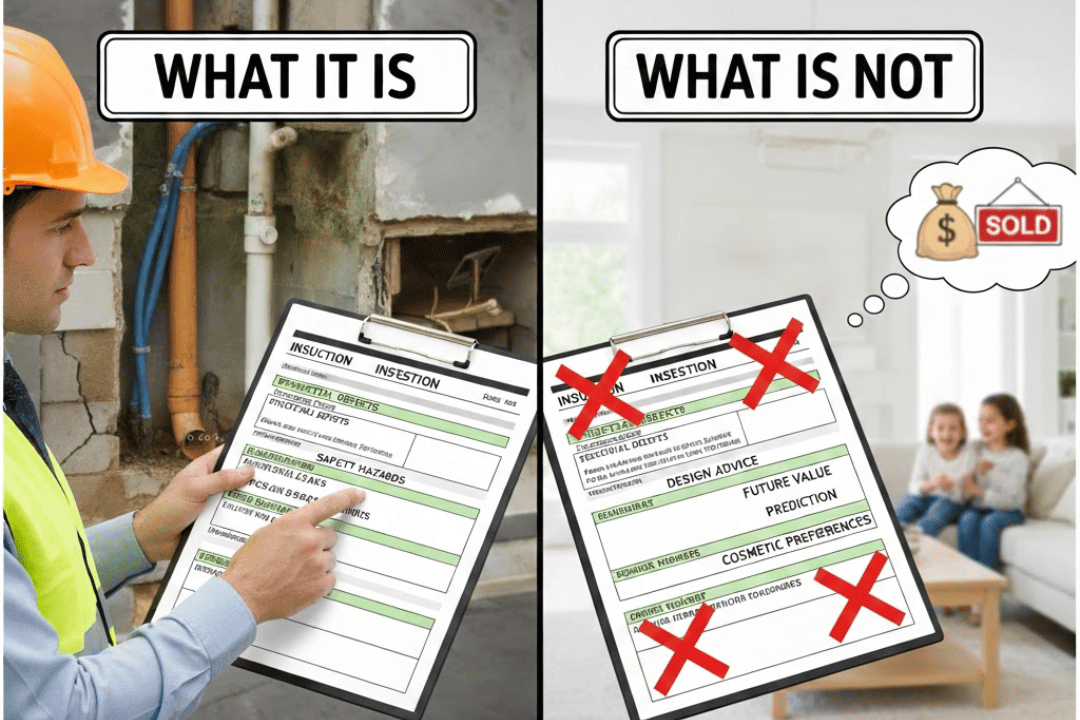
Step One: Understand What the Inspection Report Is (and Is Not)
A building inspection report is:
- a snapshot of the property’s condition at the time of inspection,
- limited to accessible areas,
- based on visual and non-invasive assessment,
- structured to identify defects, risks, and limitations.
It is not:
- a guarantee of future performance,
- a compliance certificate,
- a costed scope of works,
- a prediction of every possible hidden defect.
Misunderstanding the purpose of the report often leads to either overreaction or false confidence.
Step Two: Separate Defects by Risk, Not by Quantity
Inspection reports often list multiple findings. The correct response is not to treat all defects equally.
Defects should be interpreted in three practical categories:
High-Risk Defects
These affect:
- structural integrity,
- safety,
- moisture ingress,
- active deterioration.
High-risk defects require immediate attention or further investigation.
Moderate-Risk Defects
These involve:
- maintenance failure,
- early-stage deterioration,
- defects that may worsen over time.
They inform cost planning and timing decisions, not immediate action.
Low-Risk or Minor Issues
These include:
- cosmetic issues,
- wear consistent with age,
- non-urgent maintenance.
They rarely influence major decisions on their own.
Step Three: Review Inspection Limitations Carefully

Every inspection report contains limitations relating to:
- restricted access,
- concealed building elements,
- safety constraints,
- finishes or stored items.
These limitations define residual risk that could not be assessed.
Ignoring limitations is one of the most common post-inspection mistakes, especially when buyers assume “no comment” means “no problem”.
Step Four: Decide Whether Further Investigation Is Required
Some findings cannot be fully assessed during a standard inspection and may require:
- invasive investigation,
- specialist trade assessment,
- engineering input,
- moisture or pest diagnostics.
Further investigation is warranted when:
- the defect consequence is high,
- the cause is unclear,
- repair costs may be substantial.
This step protects against unexpected post-purchase costs.
Step Five: Translate Findings into Property Decisions
Inspection outcomes should directly influence decisions such as:
- whether to proceed with a purchase,
- whether to renegotiate terms,
- whether to plan immediate repairs,
- whether to reassess future renovation plans.
The inspection does not tell you what to do, it provides the information required to decide rationally.
Step Six: Avoid Common Post-Inspection Mistakes
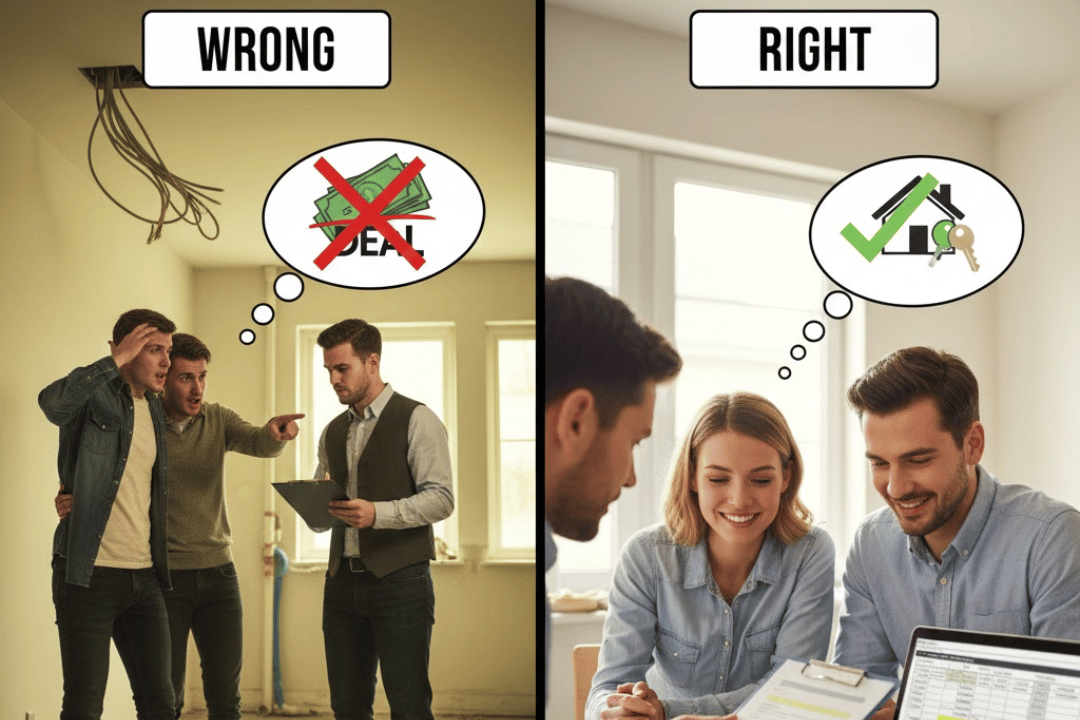
Typical errors after receiving a report include:
- focusing only on cosmetic issues,
- ignoring long-term moisture or structural risks,
- assuming new properties are low risk,
- treating inspection findings as repair instructions,
- relying on verbal summaries instead of written detail.
Each of these increases exposure to avoidable risk.
Step Seven: Use the Report as a Risk Management Tool
A well-used inspection report helps you:
- quantify unknowns,
- prioritise spending,
- plan staged maintenance,
- avoid disputes after settlement,
- justify decisions to lenders, insurers, or stakeholders.
The value of the report lies in how it is applied, not merely in what it lists.
When Post-Inspection Decisions Matter Most

Post-inspection decision-making is especially critical when:
- purchasing older properties,
- buying under time pressure,
- planning renovations,
- assessing new builds or handovers,
- managing investment risk.
In these scenarios, misinterpreting findings can have long-term financial consequences.
Post-Inspection Guidance from ProConsult Building Inspections
Knowing what to do after a building inspection requires more than reading the summary page. It requires understanding which findings matter, which risks can be managed, and which issues should influence your next decision.
ProConsult Building Inspections supports clients not only through thorough inspections, but through clear, practical explanation of inspection outcomes. Our approach focuses on helping property buyers and owners understand:
- the significance of identified defects,
- the implications of inspection limitations,
- when further investigation is justified,
- how inspection findings relate to real property risk.
If you have received a building inspection report and need clarity on the right next steps, speaking with an experienced inspector can prevent costly misinterpretation.
Contact ProConsult Building Inspections to discuss your inspection findings and next actions with confidence.